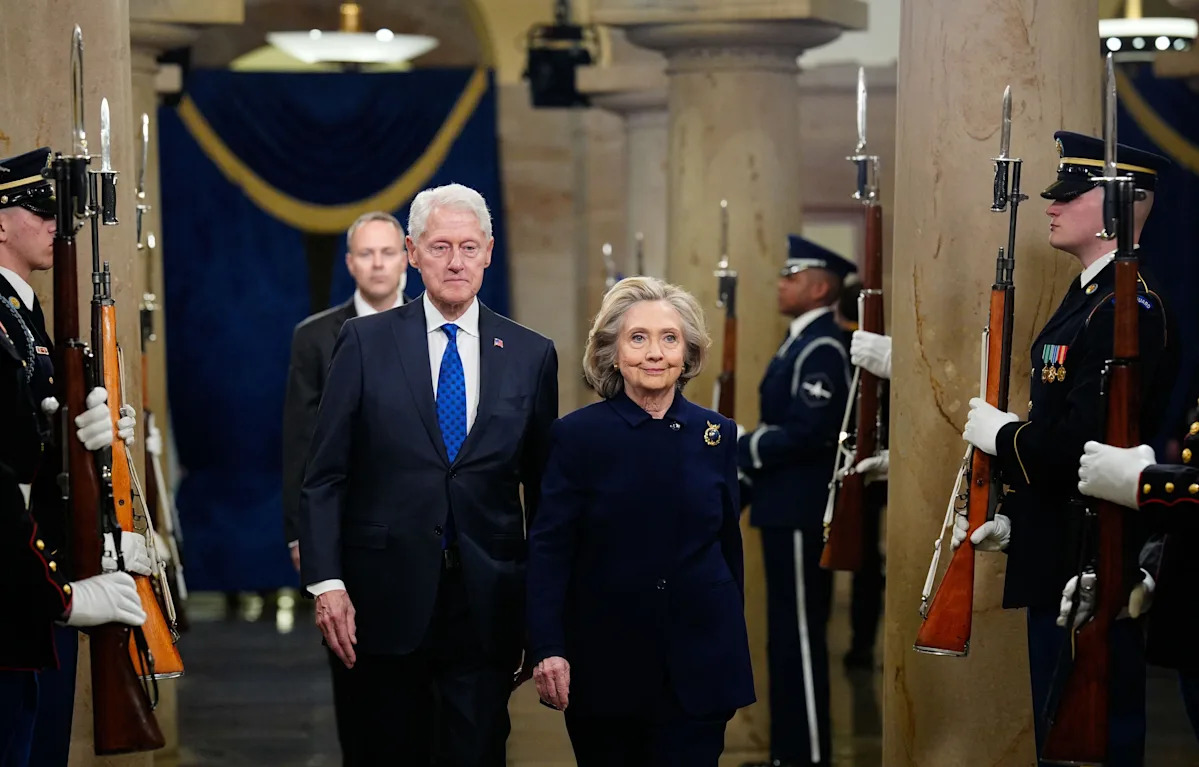
Hillary Clinton Testifies on Epstein: Unpacking the Closed-Door Probe
In a development that has captured significant public attention, former Secretary of State Hillary Clinton recently testified before House lawmakers regarding her knowledge of the late financier Jeffrey Epstein. This closed-door session marks one of the most high-profile moments in the House Oversight Committee’s ongoing and extensive investigation into Epstein's alleged sexual abuse and vast network. Coming just a day before her husband, former President Bill Clinton, was also scheduled to speak to the committee, her testimony underscores the continued scrutiny surrounding one of the most troubling sagas of our time.
The testimony, conducted privately in Chappaqua, New York, where Clinton resides, highlights the committee’s determination to gather information from all relevant parties, irrespective of their public stature. While the session itself was not broadcast to the public – despite reports that the Clintons had expressed a desire to testify publicly – it was videotaped. Given the committee’s history of releasing similar interviews and transcripts, it is highly anticipated that the details of her testimony will eventually be made public, offering crucial insights into this complex investigation.
The Road to Testimony: From Subpoena Fight to Chappaqua
The path to Hillary Clinton’s testimony was not without its hurdles. House lawmakers initially subpoenaed both Clintons last year as part of their broader probe. However, the couple resisted these subpoenas for several months, engaging in a tense back-and-forth with the Republican-led committee. This prolonged dispute ultimately shifted, with both Clintons agreeing to testify, thereby avoiding what could have been a protracted legal battle over the subpoenas. This decision to comply, as Hillary Clinton herself stated, was rooted in a belief that they had "nothing to hide."
"We have nothing to hide. We have called for the full release of these files repeatedly. We think sunlight is the best disinfectant," Clinton told the BBC, addressing the controversy surrounding their initial resistance. Her comments also highlighted a key element of the political narrative surrounding their involvement. Clinton argued that she and her husband were being used by Republicans as a "shiny object" to deflect attention from former President Donald Trump’s own connections to Epstein, claiming the focus was shifting to "the Clintons [testify], even Hillary Clinton, who never met the guy."
This strategic move to testify in Chappaqua, rather than in Washington D.C., and behind closed doors, allowed for a more controlled environment for the high-profile interrogation. It’s a common tactic in sensitive investigations to facilitate a more candid exchange, free from the immediate pressures and theatrics of a live, public hearing. However, the eventual release of the video and transcript will ensure the public's right to know is ultimately upheld. For a deeper dive into the preceding legal wrangling, readers can explore
Hillary Clinton's Epstein Testimony: From Subpoena Fight to Chappaqua.
What the Committee Seeks and the Broader Investigation
The House Oversight Committee’s interest in the Clintons stems from their past association with Jeffrey Epstein. While neither Hillary nor Bill Clinton has ever been accused of any wrongdoing in connection with the financier, Bill Clinton was notably included in a tranche of documents released by the Justice Department, images of which have circulated widely. Both have consistently maintained they have no personal knowledge of Epstein’s alleged abuse to share with the committee.
The committee’s probe is comprehensive, seeking to understand the full scope of Epstein’s operations, how he managed to evade justice for so long, and who might have facilitated or been aware of his activities. Beyond the Clintons, lawmakers have also interviewed other prominent figures, including billionaire Les Wexner, with whom Epstein had a long-standing business relationship, and former U.S. Attorney Alexander Acosta, who negotiated a controversial non-prosecution agreement that allowed Epstein to avoid federal charges in 2008.
The duration of Hillary Clinton’s testimony was not initially specified, nor was the exact timeline for the public release of the transcript or video. However, lawmakers typically address the press following such significant testimonies, offering initial remarks and setting expectations for future disclosures. The committee’s rigorous pursuit of information, from figures across the political and financial spectrum, underscores the gravity of the Epstein scandal and the determination to bring accountability. This ongoing effort highlights how the
Epstein Probe Heats Up: Hillary Clinton's High-Stakes Testimony, drawing in ever more prominent individuals.
The Historical Context and Future Implications
The testimony of the Clintons, particularly Bill Clinton’s appearance, carries significant historical weight. According to the BBC, Bill Clinton’s scheduled testimony marks the first time a former president has testified to Congress since 1983. This rare occurrence elevates the profile of the Epstein investigation even further, cementing its place as a matter of immense national interest and historical record.
The committee's decision to travel to Chappaqua to conduct these interviews behind closed doors, particularly after months of resistance from the Clintons, speaks volumes about their commitment to securing testimony from key individuals. It suggests a pragmatic approach to information gathering, prioritizing the content of the testimony over the spectacle of a public hearing, at least initially.
As details eventually emerge from these closed-door sessions, the public will gain a clearer picture of what was discussed and whether any new information relevant to Epstein’s illicit activities has surfaced. The focus will undoubtedly be on discerning any previously unknown connections, instances of enabling behavior, or failures in oversight that allowed Epstein’s horrific crimes to continue for so long. The "Epstein Files Transparency Act" also plays a crucial role here, mandating the release of documents to comply with the public's right to know and furthering the pursuit of truth.
Navigating Public Scrutiny and Political Narratives
The high-profile nature of Hillary Clinton’s involvement in the Epstein probe means that every statement, every action, is intensely scrutinized through various lenses – legal, political, and public. While the Clintons have consistently denied any personal knowledge of Epstein’s crimes and have not been accused of wrongdoing, their association has become a persistent point of contention.
Hillary Clinton's assertion that Republicans are using their testimony as a "shiny object" to divert attention is a significant political claim. It frames the probe, at least in part, as a battleground for political narratives, rather than solely a dispassionate search for truth. This perspective underscores the challenge of conducting such an investigation in a hyper-partisan environment, where facts can often become entangled with political agendas.
For the public, discerning the truth amidst competing claims and political maneuvering becomes paramount. It's crucial for citizens to rely on official transcripts and verified reports once they are released, rather than speculative or partisan commentary. The committee's eventual release of video and transcripts will provide the most direct access to the factual content of the testimony, allowing for informed judgment.
Conclusion
Hillary Clinton’s testimony regarding Jeffrey Epstein represents a pivotal moment in an investigation that continues to unravel a disturbing network of power, wealth, and abuse. While conducted behind closed doors, its significance is undeniable, drawing the intense focus of the public and media alike. The journey from initial subpoena resistance to a willingness to testify underscores the complexities and pressures surrounding such high-stakes probes. As the House Oversight Committee continues its work, and with the anticipated release of transcripts and video footage, the public awaits further clarity on the full extent of Jeffrey Epstein’s network and the accountability sought by victims and justice advocates. This crucial testimony, alongside Bill Clinton's, is a testament to the enduring quest for truth and the belief that sunlight truly is the best disinfectant, even in the darkest of corners.